
Franklin County Criminal Docket Searches
Nebraska JUSTICE is the best online starting point for a Franklin criminal docket search. It serves county and district trial courts across all 93 counties. A search can return a case summary, party names, criminal offense information, financial information, a register of actions, judge notes where applicable, and document images when one is available. Enter the full party name first. Add Franklin County only when a broad result set needs trimming, then bring in court type, criminal case type or subtype, and year as needed. A calendar result helps with an upcoming setting, though it is not a complete history.
Match the case before opening any document. Franklin County Court handles most misdemeanors, traffic matters, infractions, and felony preliminary hearings. Franklin County District Court takes general-jurisdiction criminal cases and felonies after bindover. If you already have the case number, keep it exactly as displayed rather than guessing at a local format that the official sources do not publish.
- Open the state’s JUSTICE search and accept its terms before beginning a criminal case lookup.
- Search the complete party name, then confirm the caption, county, court, and case type.
- Use the register of actions to read event dates, filings, orders, and the next setting.
- Open a document image only when an image link is present and the record is not restricted.
- Contact the responsible Franklin clerk for a copy, certification, older paper record, or a result that needs verification.
Nebraska’s JUSTICE Search landing page is the official starting screen for the one-time service.
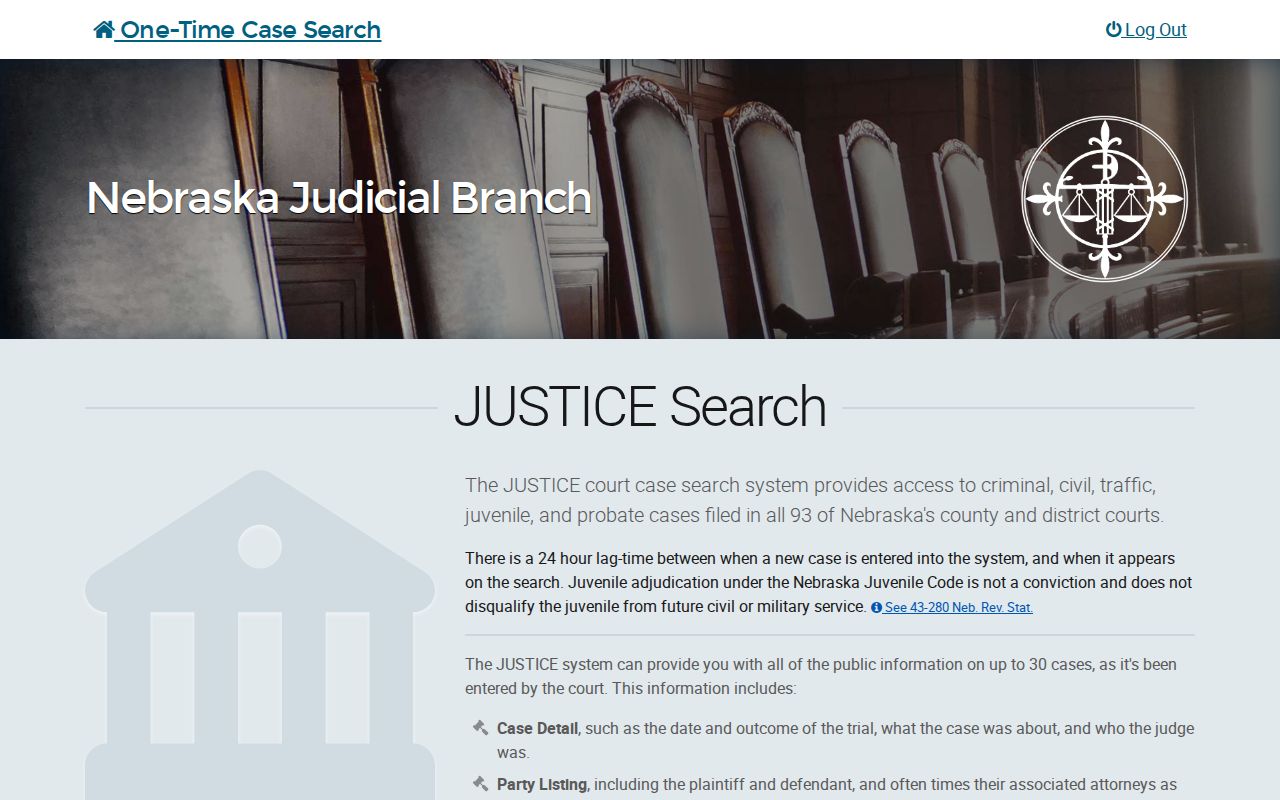
The landing screen shows the public search route only. It does not promise that every court document or recent event appears online.
Franklin Criminal Docket Search Limits
A single JUSTICE search costs $17 under the current 2026 notice, even when nothing comes back. Purchased results stay viewable for three calendar days. The public result set caps at 30 records. The service also requires JavaScript and cookies. Those limits argue for a careful Franklin County criminal docket search. Begin broadly with the complete name, then narrow only if you must. Adding a court, year, or case-type filter too early can hide a valid case entirely.
New entries can lag by about 24 hours. A just-filed complaint, a recent citation, or a fresh order may be missing even though the matter exists. A no-result screen can also stem from a spelling difference, a name change, the wrong court, a restricted record, an older non-electronic file, or a data-entry difference. It is not proof that no case exists. When the paid online session falls short, the courthouse terminal, law-library access points, and the responsible clerk remain open routes.
Note: A paid JUSTICE result is case information. It is not a certified copy and not a substitute for clerk confirmation.
Criminal Dockets: What They Show
Think of a Franklin criminal docket as an event record. Rule 1-805 defines the public electronic information that can appear, including party indexes, case summaries, the register of actions with available images, calendar entries, and summary orders or judgments. The register tells you an event occurred and when it was entered. An image, when one exists, may show the actual filing. These are different layers of the same court record. Neither one outranks the clerk's file, so check before treating either as complete.
| Case number | Use the identifier exactly as JUSTICE displays it, such as case number shown by JUSTICE; no Franklin-specific format was documented. |
|---|---|
| Case summary | Identifies the court, caption, parties, and basic case status. |
| Offense information | May identify the charged offense in a criminal case, subject to access restrictions. |
| Register of actions | Lists filings, settings, orders, and other dated case events. |
| Calendar entry | Can show case number, caption, date, time, and location for a scheduled setting. |
Nebraska Case Information eServices lays out the records and image links available through the state's case-information system.
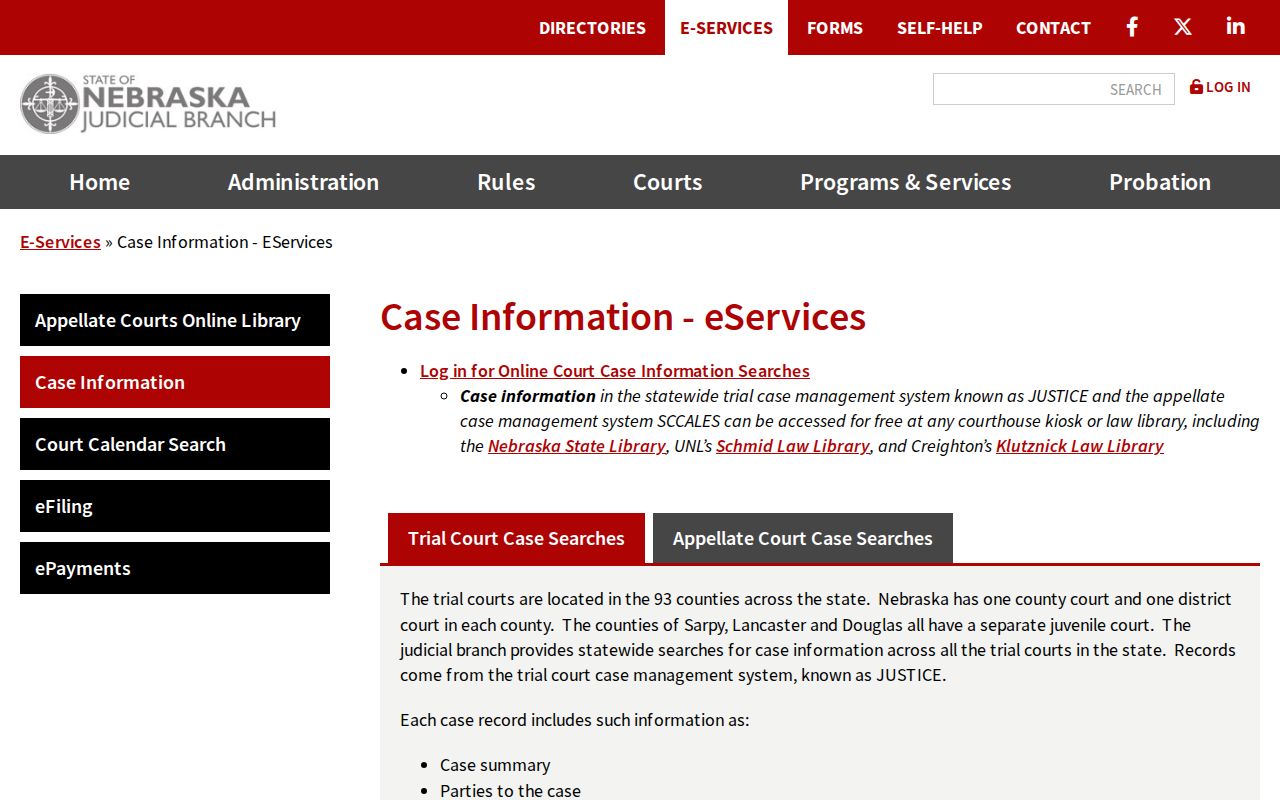
Read the case summary beside the register of actions. That keeps a scheduled event from being mistaken for the final outcome of a criminal matter.
Franklin Criminal Docket Filings
Franklin's FY2025 County Court caseload report gives local context without turning filings into outcomes. It lists 14 adult felony filings, 46 misdemeanor filings, and 129 traffic filings. The felony figure is a county-court filing count only. It says nothing about how many felony matters later sat in District Court, how many were resolved, or how many people were involved. Traffic is the largest listed category. Even so, a criminal docket search has to separate a traffic or infraction matter from a misdemeanor or felony proceeding.
Franklin County Court’s official page identifies the local court’s criminal, traffic, and preliminary-hearing roles.
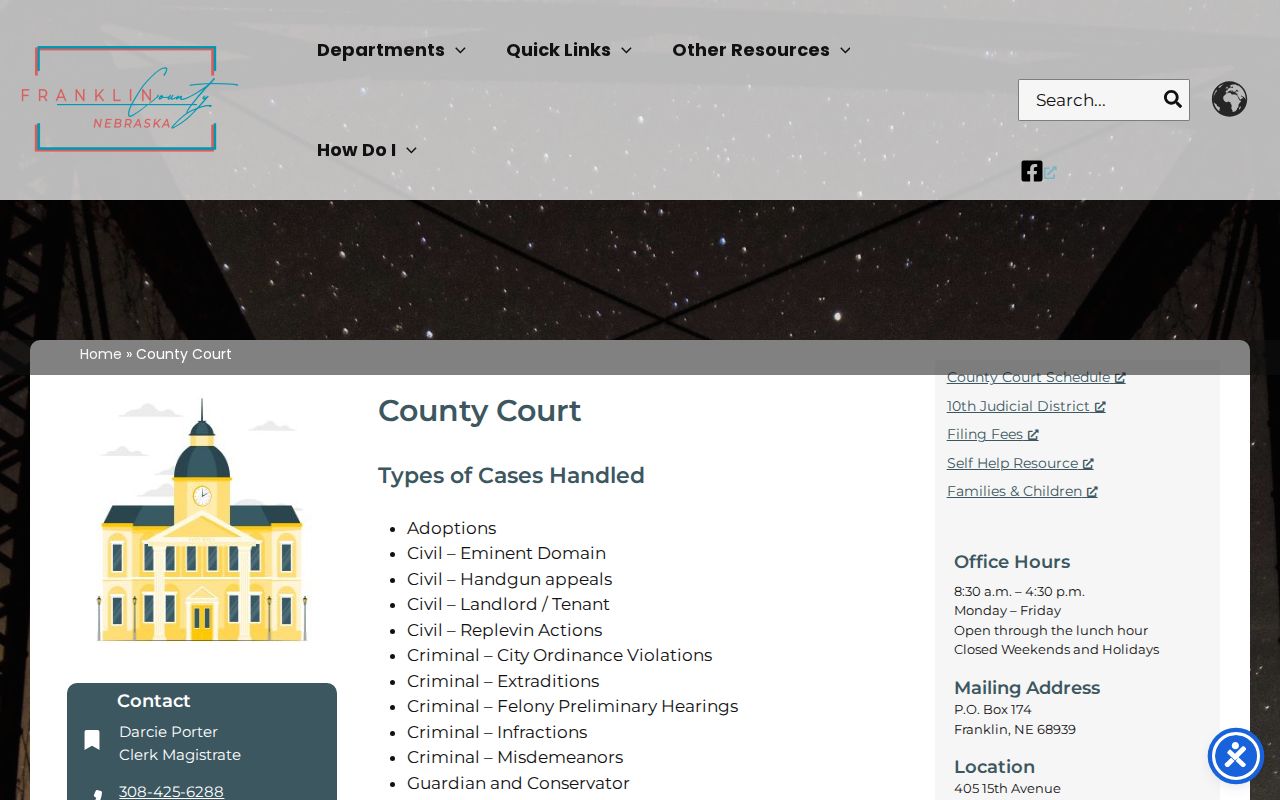
Those numbers explain why the court category is an essential search filter, not an optional detail.
Criminal Case Stages on the Docket
A criminal docket can pass through several settings before a final order arrives. The exact labels vary. A charge filing may be followed by an arraignment, a pretrial setting, a plea or trial, a disposition, and sentencing. An arraignment is a court appearance where the charge is addressed. In a felony county-court matter, a preliminary hearing tests probable cause. A disposition records a resolution. Still, the register and any resulting order remain the way to confirm what the court actually entered.
Docket flow: Charge Filed › Arraignment › Pretrial Setting › Plea or Trial › Disposition › Sentencing
Dates in that sequence can shift. The Multi-Court Calendar works best for current and future settings, while JUSTICE holds the event history. A calendar entry is a scheduled setting, not a finding of guilt or an outcome.
Franklin Felony Docket Bindover
A felony prosecution in Franklin County can move between two courts. County Court takes the first look. If the judge finds probable cause, the case binds over to District Court, and the general-jurisdiction criminal record from that point forward lives there. So a docket search that turns up an early County Court case number tells only part of the story. Later events may sit in a District Court file instead. The case could also have ended in a resolution, or the record may now be restricted.
| Franklin court | Criminal docket role | Where to confirm |
|---|---|---|
| County Court | Misdemeanors, traffic, infractions, and felony preliminary hearings | Clerk Magistrate and county-court result in JUSTICE |
| District Court | General-jurisdiction criminal matters and felony proceedings after bindover | Clerk of the District Court and district-court result in JUSTICE |
Rule 1-805 lists the public electronic calendar and register categories that help trace those court events.
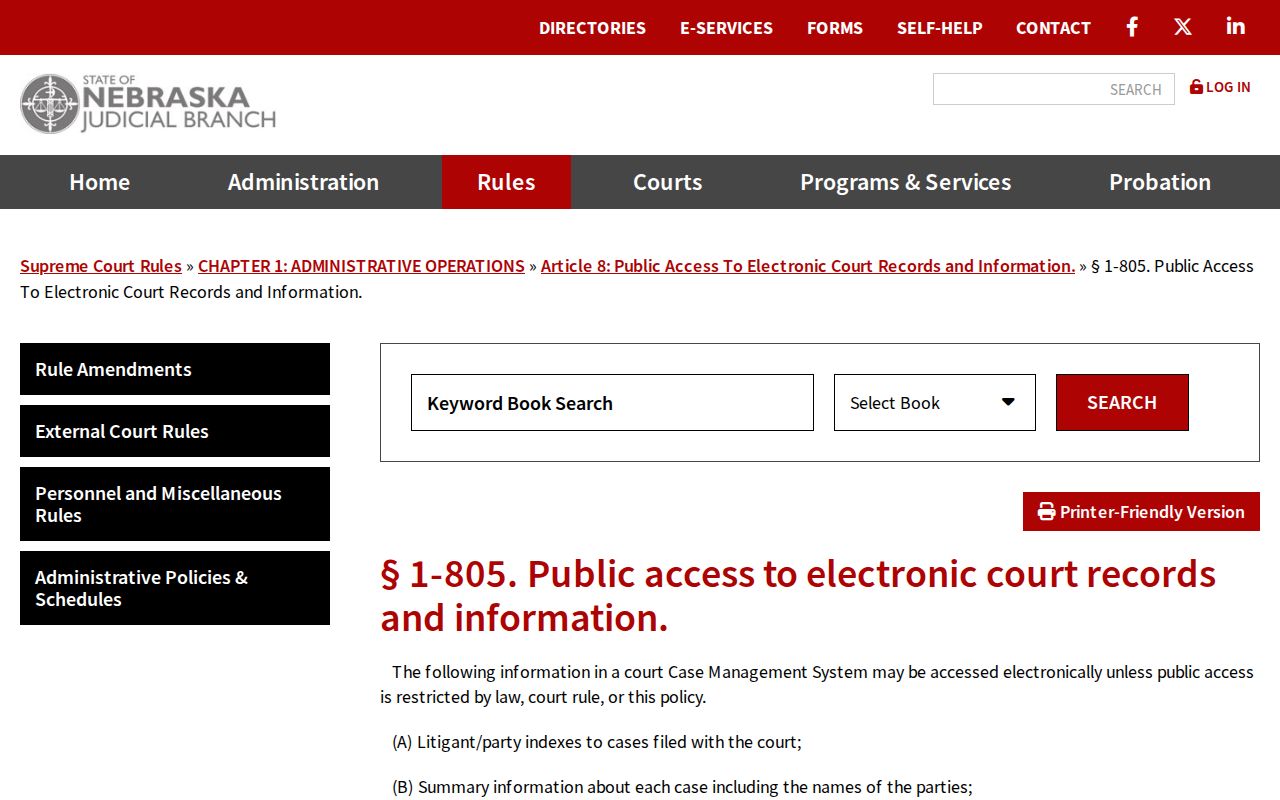
Track the court named in each entry. A gap in the county-court docket never proves the prosecution stopped.
Franklin County Criminal Docket Courts
Franklin County keeps two trial-court records offices. Both sit under one roof at 405 15th Avenue, Franklin, Nebraska 68939. Darcie Porter is Clerk Magistrate for Franklin County Court, reachable at 308-425-6288, P.O. Box 174. Marcia Volk Schenker is Clerk of the District Court. She keeps the district-court docket and can be called at 308-425-6202, P.O. Box 146. Each clerk's official page posts regular hours of 8:30 a.m. to 4:30 p.m. Those hours run Monday through Friday. The offices stay open over lunch and close on weekends and holidays.
County Court criminal records
Clerk Magistrate Darcie Porter
405 15th Avenue, Franklin, NE 68939
P.O. Box 174
308-425-6288
District Court criminal records
Clerk of the District Court Marcia Volk Schenker
405 15th Avenue, Franklin, NE 68939
P.O. Box 146
308-425-6202
One fax detail needs care. The county phone directory prints the county-court fax as a phone number, but the County Court page gives 308-425-6289 as fax. Pull case-specific contact details from the court page itself, and confirm how to send before you transmit a request.
Franklin Criminal Docket Copies
Copies of complaints, orders, judgments, or register entries start with state form CC 3:29. The form captures the court, county, case number, case name, document name, document date, delivery choice, and your contact information. The responsible clerk is the practical source. Email delivery of non-certified copies is listed at no charge. Mailed non-certified copies run $0.25 per page. Certified copies by email cost $1 per request. Mailed certified copies add $1 per seal plus $0.25 per page. Costs are prepaid. Ask the clerk to confirm current payment and delivery practice before sending anything.
Transcripts take a separate route through CC 1:14. That form identifies the hearing, location, judge, and whether the request covers all or part of the record. A non-party usually needs trial-judge approval, and the estimate is prepaid. Digital audio stands apart from the official court record too. A docket search result, a plain copy, a certified copy, a transcript, and audio are five different products. Treat them that way.
Note: The Franklin clerk pages publish no dedicated court-record request email. They post no local copy turnaround time and no online copy-request form.
Access Rules for Criminal Dockets
Public access to court dockets has limits. Rule 1-805 opens designated electronic case information. It covers party indexes, summaries, registers with available images, calendars, and summary orders, subject to exclusions. Rule 2-215 adds a general presumption that filings are public. That rule allows inspection at a clerk terminal or the State Library. Paper records never made electronic may need clerk help. Rule 1-808 keeps statutory and rule-based exclusions in force. A public index never overrides a seal, a confidentiality rule, or restricted-record status.
Key rules:
Nebraska Supreme Court Rule 1-805 identifies categories of public electronic case information.
Nebraska Supreme Court Rule 1-808 covers excluded and restricted court information.
Nebraska Supreme Court Rule 2-215 addresses public filing inspection and copies.
Rule 1-808’s official text explains the court’s duty not to disclose excluded information.
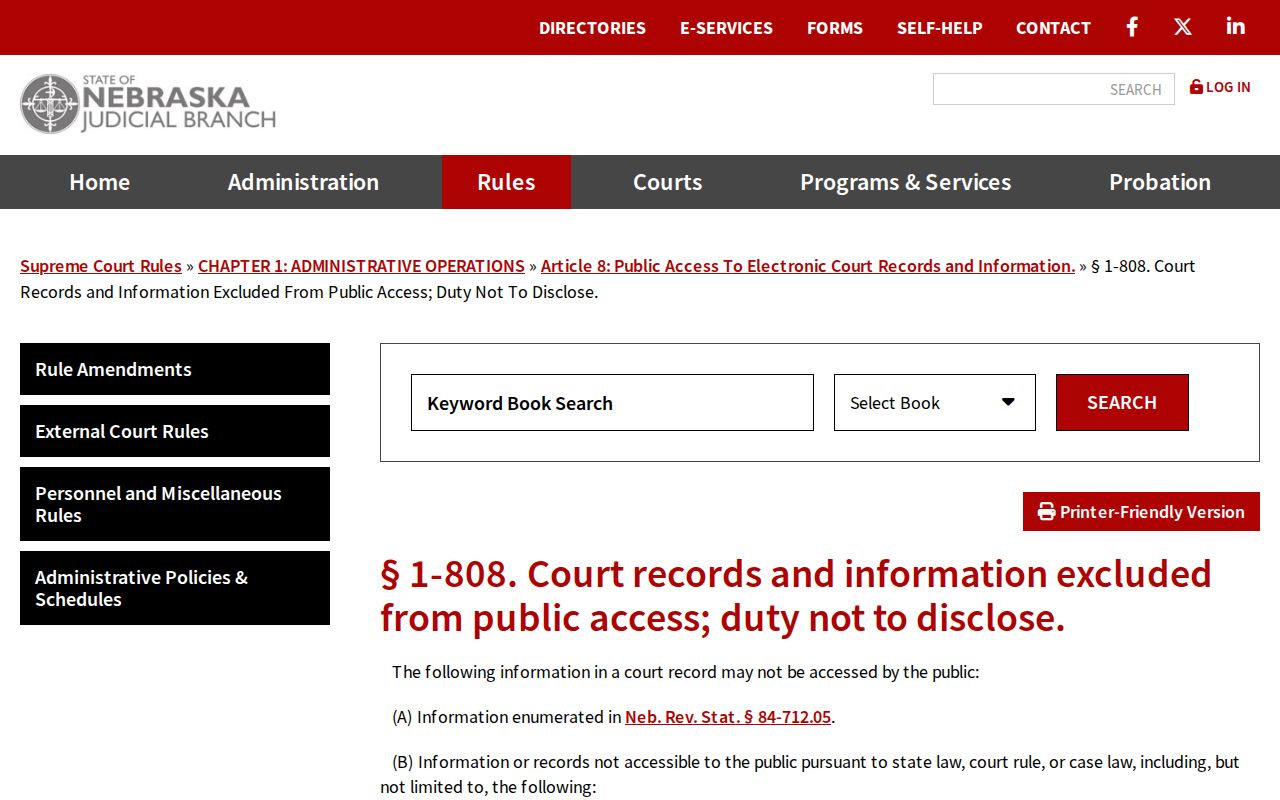
A missing image has several possible causes. The record may be unimaged, sealed, restricted, not public, or simply absent from that search.
Franklin Juvenile Criminal Docket Access
Juvenile matters do not work like adult criminal docket lookups. Under Nebraska Judicial Branch guidance, records for acts committed before age 18 should seal automatically. A correction process exists when one did not. Adoption records sit outside general electronic public access. To obtain a copy of a sealed record, the person must use the authorized process. Form DC 1:12 belongs to the person whose record was sealed. It cannot pull someone else's file.
Protected information also shapes ordinary criminal filings. The criminal redaction rule limits personal identifiers. These include full Social Security or tax numbers, full account information, and minor names. A docket event can stay public even when its document image is withheld or redacted.
Nebraska's juvenile record sealing guidance lays out the official statewide process and its access caveats.
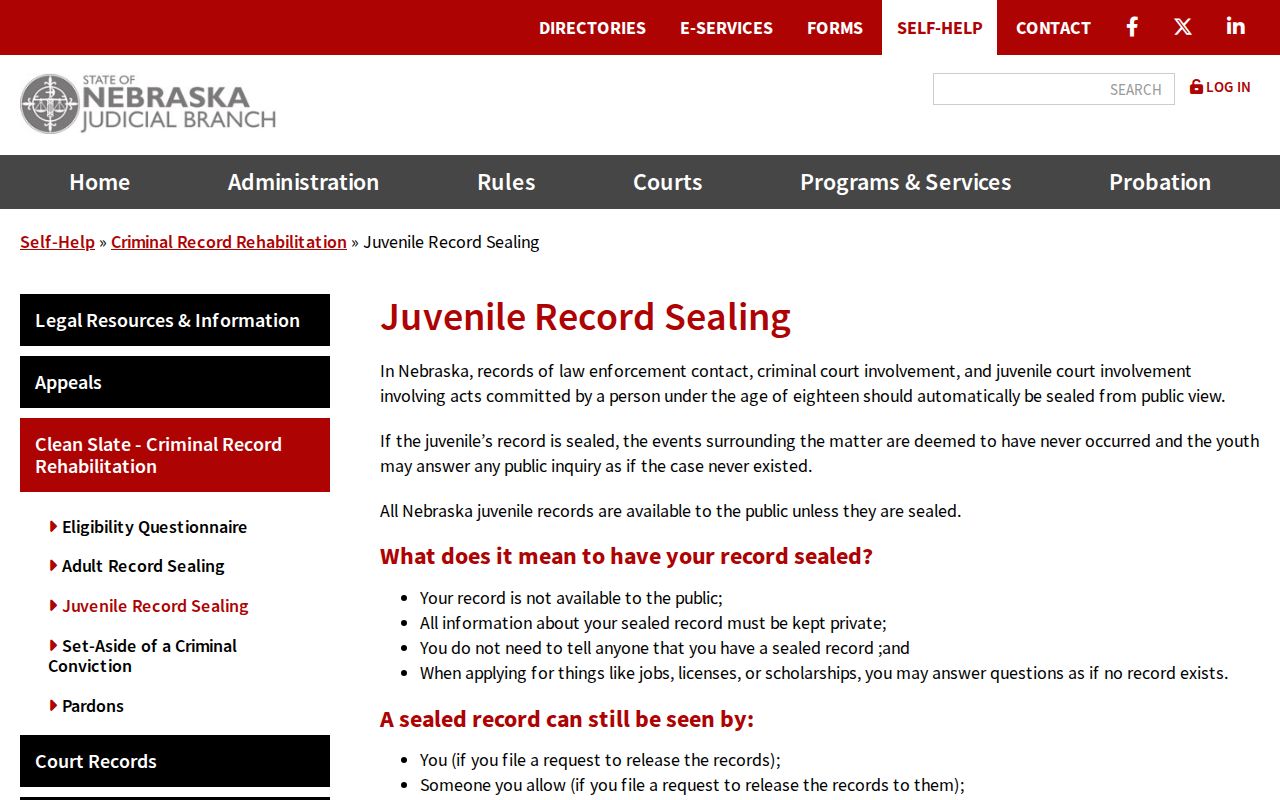
When a result is protected, follow the court's stated procedure. Never read hidden facts into a record you cannot see.